
R-454B Refrigerant in Florida: What Every Homeowner Needs to Know in 2026
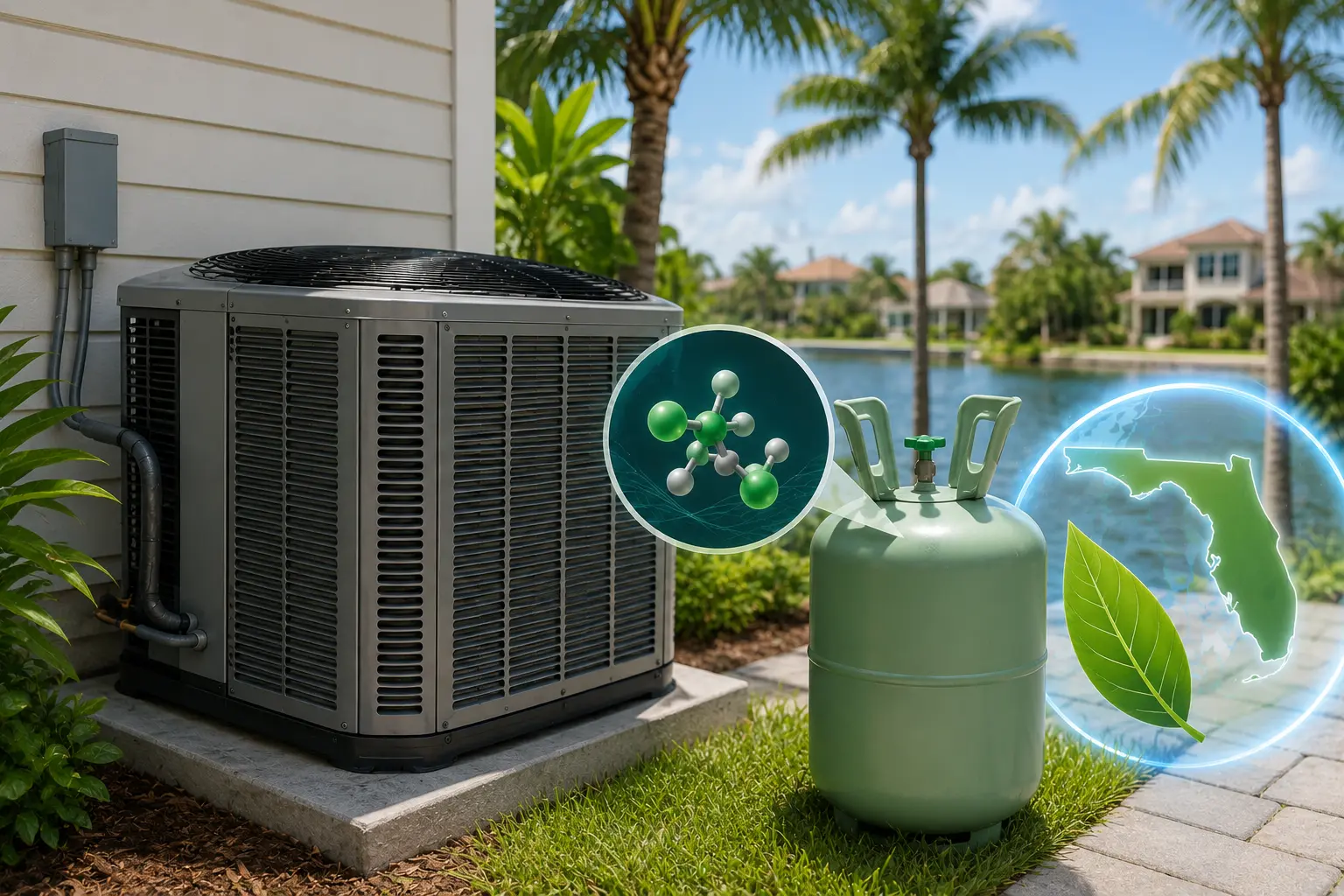
R-454B refrigerant is now the standard for new residential air conditioning systems sold in Florida as of January 2026. If you’re a homeowner in Hillsborough or Pasco County, this change directly affects your next AC purchase, your repair options, and your long-term cooling costs.
At Custom AC Quality, we’ve spent over 20 years helping families and businesses across Zephyrhills and surrounding communities stay comfortable. We’ve been preparing for this refrigerant transition since the EPA finalized its phase-down rules under the AIM Act, and we want to make sure you have clear, honest answers about what R-454B means for your home.
Why R-410A Is Being Phased Out and What R-454B Means for You
R-410A, the refrigerant used in most home AC systems installed since the early 2000s, has a high global warming potential (GWP) of 2,088. The EPA’s AIM Act, signed into law in 2020, mandates a phased reduction in the production and import of high-GWP hydrofluorocarbons (HFCs). As of January 1, 2025, manufacturers can no longer produce new residential AC equipment that uses R-410A.
R-454B is the primary replacement. It carries a GWP of 466, roughly 78% lower than R-410A. The Department of Energy and major equipment manufacturers like Carrier, Trane, and Lennox have adopted R-454B as the go-to refrigerant for residential split systems and heat pumps.
For you as a homeowner, this means any new AC system you purchase in 2026 will use R-454B. Your existing R-410A unit can still be serviced and recharged with R-410A refrigerant for now, supplies remain available. But as production decreases over time, R-410A costs will rise. Understanding this timeline helps you plan ahead rather than react to an emergency breakdown.
How R-454B Performs in Florida’s Heat and Humidity
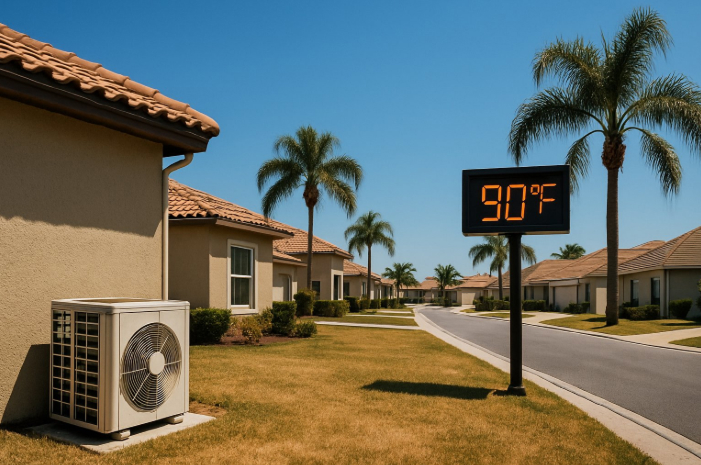
Florida’s climate puts extreme demands on cooling systems. Summer temperatures regularly exceed 95°F in Zephyrhills and throughout Pasco County, with humidity levels that can push heat index values well past 100°F. Any new refrigerant needs to handle these conditions reliably.
R-454B performs well in high-heat environments. It operates at similar pressures and temperatures to R-410A, which means system efficiency stays comparable. Early field data from manufacturers and independent HVAC testing labs show that R-454B systems achieve SEER2 ratings that meet or exceed their R-410A predecessors.
We’ve already installed R-454B equipment for customers in our service area, and the performance has been consistent. Cooling capacity holds steady even during peak afternoon heat. Dehumidification, critical here in Florida, works effectively because R-454B systems use the same vapor compression cycle homeowners are used to. You won’t notice a difference in comfort. The system just runs on a refrigerant that’s significantly better for the environment.
Does Your Current AC System Need to Be Replaced?
No. You do not need to replace a working R-410A system because of the refrigerant transition. The phase-out applies to the manufacture of new equipment, not to existing units already installed in homes.
If your current AC is running well and was installed within the last 5–8 years, it likely has plenty of service life remaining. R-410A refrigerant will continue to be available for repairs and recharges, though prices may increase gradually as supply tightens.
Here’s where timing matters: if your system is 12–15 years old, frequently needs repairs, or struggles to cool your home evenly, it makes financial sense to upgrade now rather than invest more money into aging R-410A equipment. A new R-454B system gives you current efficiency standards, a manufacturer warranty, and a refrigerant with a long future ahead of it.
We evaluate each customer’s situation individually. Our technicians assess your existing equipment, ductwork condition, and home layout before recommending replacement. Sometimes a repair is the right call. Sometimes it isn’t.
Cost Expectations for R-454B Equipment and Installation
New R-454B systems cost roughly 10–20% more than equivalent R-410A units did at the end of their production cycle. This premium reflects updated components, modified safety features, and the costs manufacturers absorbed during the engineering transition.
For a typical 3-ton split system installation in a Florida home, homeowners can expect total costs (equipment plus labor) ranging from $7,500 to $14,000 depending on efficiency tier, brand, and any ductwork modifications needed. Higher SEER2-rated systems cost more upfront but reduce monthly energy bills.
Some important cost factors to consider:
- Ductwork condition: Leaky or undersized ducts reduce efficiency and may need repair or replacement during installation.
- Electrical requirements: R-454B systems may need updated disconnect boxes or minor electrical work.
- Rebates and incentives: Florida utilities and federal tax credits (under the Inflation Reduction Act) may offset a portion of your investment. We help customers identify every available incentive.
We provide written estimates with no hidden fees. Financing options are available for customers who prefer to spread costs over time.
Safety Considerations Florida Homeowners Should Understand
R-454B is classified as an A2L refrigerant, meaning it has low flammability. This is different from R-410A, which is non-flammable (A1 classification). The distinction sounds alarming, but context matters.
A2L refrigerants require an ignition source and a specific concentration to ignite. Under normal operating conditions in a properly installed system, the risk is extremely low. The refrigerant charge in a residential AC system disperses quickly if a leak occurs, making ignition practically impossible in a ventilated space.
Updated building codes (based on ASHRAE Standard 15 and UL 60335-2-40) require safety features in R-454B equipment, including leak detection sensors that trigger system shutdown. These protections are built into the units at the factory.
The key safety factor is proper installation. An experienced, EPA-certified technician who follows manufacturer specifications and local code requirements eliminates the risks associated with A2L refrigerants. This is not a DIY situation, professional installation is essential.
How to Choose the Right HVAC Contractor for Your R-454B Upgrade
Not every HVAC company has the training or equipment to install R-454B systems correctly. The A2L classification requires specific handling procedures, updated tools, and knowledge of current building codes. Choosing the wrong contractor can void your warranty and create safety issues.
Look for these qualifications:
- EPA Section 608 certification (required by federal law for handling refrigerants)
- Manufacturer training on R-454B systems from brands like Carrier, Trane, or Lennox
- Active state licensing and insurance in Florida
- Verified experience with A2L refrigerant installations in your area
At Custom AC Quality, our technicians have completed manufacturer-specific R-454B training and carry all required certifications. We’ve served Hillsborough and Pasco County since 2004, and we service all major brands. We perform load calculations for every installation to ensure proper system sizing, oversized or undersized equipment wastes energy and shortens system life.
Ask any contractor you consider for references, written warranties, and proof of R-454B training. A reputable company will provide all of this without hesitation.
Preparing Your Home for the R-454B Transition
If you’re planning to upgrade your AC system in 2026, a few steps can make the process smoother and help you get the most from your new R-454B equipment.
Schedule an assessment. Have a licensed HVAC technician inspect your current system, ductwork, and electrical panel. This identifies any issues that need to be addressed before installation day.
Check your ductwork. Leaky or deteriorating ducts waste up to 30% of cooled air, according to the U.S. Department of Energy. Sealing and insulating ducts before a new system goes in maximizes efficiency from day one.
Review your insulation. Florida homes, especially older ones near areas like Dade City and Plant City, sometimes have insufficient attic insulation. Better insulation reduces the cooling load on your new system.
Ask about maintenance plans. Regular maintenance keeps your R-454B system running at peak efficiency and protects your warranty. We offer maintenance plans that include seasonal tune-ups, priority scheduling, and discounted repairs.
The R-454B transition isn’t something to stress about. It’s a planned, well-supported industry shift that results in better equipment and a lower environmental footprint. If you have questions or want to discuss your options, contact our team at Custom AC Quality. We’re here to help you make an well-informed choice, on your timeline, not someone else’s.