
Florida’s $346 Million in Energy Rebates: What HVAC Upgrades Qualify in 2026
Florida energy rebates for heat pumps in 2026 represent a real opportunity for homeowners to cut thousands off the cost of a new HVAC system. Between federal tax credits, state-funded programs, and local utility incentives, the savings have never been this accessible. At Custom AC Quality, we’ve helped homeowners and businesses across Hillsborough and Pasco County upgrade their comfort systems since 2004. This guide breaks down every rebate and credit available right now, what qualifies, and how to claim your savings before funds run out.
Why 2026 Is the Year to Upgrade to a Heat Pump in Florida
Heat pump technology has become the most efficient way to heat and cool a Florida home. Unlike traditional air conditioners paired with furnace systems, heat pumps handle both jobs with one unit. That means lower energy bills year-round, especially in our climate, where cooling demand dominates.
The financial incentives available in 2026 make the timing even better. The Inflation Reduction Act (IRA) continues to fund generous federal tax credits, and Florida’s share of the Home Energy Rebates program is now active. These programs won’t last forever. Funding is distributed on a first-come, first-served basis, and once allocations are exhausted, they’re gone.
For homeowners in Zephyrhills and surrounding communities like Wesley Chapel, Tampa, and Plant City, a heat pump upgrade paired with available rebates can reduce out-of-pocket costs by $8,000 or more. We’ve seen customers lower their monthly energy usage by 30–50% after switching from older systems to high-efficiency heat pumps.
Federal Tax Credits Still Available for Heat Pump Installations
The federal government offers a tax credit of up to $2,000 for qualifying heat pump installations under Section 25C of the IRA. This credit applies to the cost of equipment and installation labor for ENERGY STAR-certified heat pumps that meet the Consortium for Energy Efficiency (CEE) highest efficiency tier.
Key details:
- The credit covers 30% of project costs, capped at $2,000 per year for heat pumps specifically.
- It’s a tax credit, not a deduction, it reduces your tax bill dollar-for-dollar.
- You can claim the credit annually, so if you also install a qualifying smart thermostat or upgrade insulation, those may qualify for additional credits under the same provision.
- There is no income limit for this federal credit. All homeowners are eligible.
You claim the credit when you file your federal taxes using IRS Form 5695. We recommend keeping all receipts, manufacturer certification statements, and your HVAC contractor’s invoice. Our team at Custom AC Quality provides detailed documentation with every heat pump installation to make tax filing straightforward.
Florida State Rebates: HEAR and HOMES Programs Explained
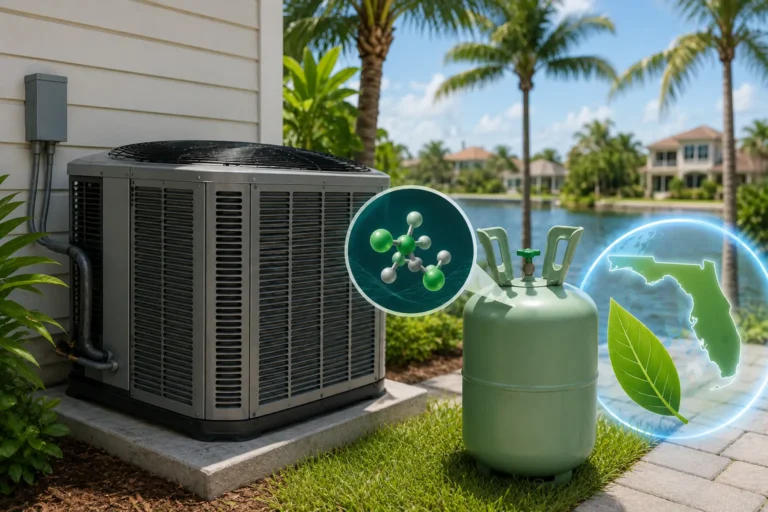
Florida received over $346 million in federal funding through two IRA-backed rebate programs: the Home Efficiency Rebates (HOMES) program and the Home Electrification and Appliance Rebates (HEAR) program. The Florida Department of Agriculture and Consumer Services (FDACS) administers both.
HOMES Program
The HOMES program rewards whole-home energy savings. If your HVAC upgrade, combined with other improvements like duct sealing or insulation, achieves a 35% or greater reduction in energy use, you could receive up to $4,000 in rebates (or up to $8,000 for low- and moderate-income households). Energy savings are verified through modeling or measured performance.
HEAR Program
The HEAR program provides point-of-sale rebates for specific equipment, including heat pumps. Qualifying households can receive up to $8,000 toward a heat pump purchase. This program is income-qualified: households earning less than 150% of the area median income get the largest rebates, while those earning between 150–300% of AMI qualify for partial rebates.
Both programs are designed to stack with the federal tax credit. That means a qualifying homeowner could combine HEAR or HOMES rebates with the $2,000 federal credit for maximum savings. We help our customers determine which programs they qualify for before any work begins.
FPL and Local Utility Rebates for Hillsborough and Pasco County Homeowners
Beyond federal and state programs, your electric utility may offer additional rebates. Florida Power & Light (FPL), Duke Energy, Tampa Electric (TECO), and Withlacoochee River Electric Cooperative all serve portions of Hillsborough and Pasco County.
TECO, which covers much of Hillsborough County, has historically offered rebates for high-efficiency heat pump installations. Duke Energy and Withlacoochee River Electric, which serve parts of Pasco County including areas around Zephyrhills and Dade City, also run seasonal efficiency incentive programs.
Rebate amounts and availability change by program year, so we always recommend checking directly with your utility or asking our team. We stay current on every local incentive so our customers don’t leave money on the table. Utility rebates typically range from $150 to $800 depending on the system’s SEER2 rating and capacity.
How Much Can You Save on a Heat Pump Installation in 2026?
Here’s a realistic savings breakdown for a homeowner installing a qualifying heat pump system in 2026:
| Incentive Source | Potential Savings |
|---|---|
| Federal Tax Credit (Section 25C) | Up to $2,000 |
| HEAR Program Rebate | Up to $8,000 |
| HOMES Program Rebate | Up to $4,000–$8,000 |
| Local Utility Rebate | $150–$800 |
| Total Potential Savings | $2,150–$18,800 |
Not every household will qualify for the maximum across all programs. Income level, system efficiency, and the scope of the project all factor in. But even a moderate-income homeowner who claims the federal credit and a partial HEAR rebate could save $4,000–$6,000 on a new heat pump.
Add in lower monthly energy costs, our customers in Pasco County regularly report savings of $50–$100 per month after upgrading, and the long-term value is significant.
Steps to Claim Your Florida Heat Pump Rebates and Tax Credits
Claiming these incentives requires some planning, but the process is manageable. Here’s how we guide our customers through it:
1. Schedule a home assessment. We evaluate your current system, ductwork, and insulation to determine what upgrades qualify for the best rebates.
2. Choose a qualifying heat pump. The system must meet ENERGY STAR and CEE efficiency requirements. We only install equipment that meets or exceeds program thresholds.
3. Apply for state rebates before or at the time of installation. HEAR rebates are applied at the point of sale through approved contractors. HOMES rebates may require energy modeling. We handle the paperwork.
4. Keep all documentation. Manufacturer certifications, itemized invoices, and proof of installation are required for both state rebates and the federal tax credit.
5. File IRS Form 5695 with your tax return. This is how you claim the federal credit. Your tax professional can walk you through it with the documents we provide.
Timing matters. State rebate funding is limited, and we’ve already seen strong demand across our service area. Starting the process early gives you the best chance of securing funds.
How to Choose the Right Heat Pump System to Maximize Your Rebates
Not all heat pumps qualify for every rebate. To get the most from available incentives, the system you install needs to meet specific efficiency standards.
For the federal tax credit, your heat pump must meet the CEE’s highest efficiency tier. In practice, that means a minimum SEER2 rating of 16 and an HSPF2 of 9 or higher for ducted systems. Ductless mini-split heat pumps have their own thresholds and often exceed them easily.
We install heat pump systems from all major manufacturers and match each customer with equipment that fits their home’s size, layout, and budget. A properly sized system runs more efficiently and lasts longer. Oversized units short-cycle and waste energy. Undersized units struggle on the hottest days.
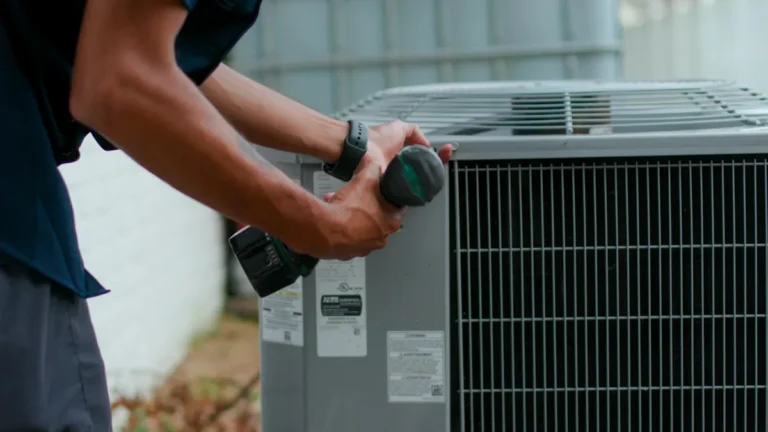
At Custom AC Quality, our technicians perform Manual J load calculations to determine the exact capacity your home requires. This step is essential, both for comfort and for ensuring your installation qualifies for maximum rebate amounts.
If you’re ready to explore your options, contact our team to schedule a free consultation. We’ll walk you through available Florida energy rebates for heat pumps, confirm your eligibility, and handle every detail from system selection to rebate paperwork.