
Wildfire Smoke in Pasco County: How Your AC Filter Is Your First Line of Defense
Wildfire Smoke in Pasco County Raises Air Quality Concerns for Local Homeowners
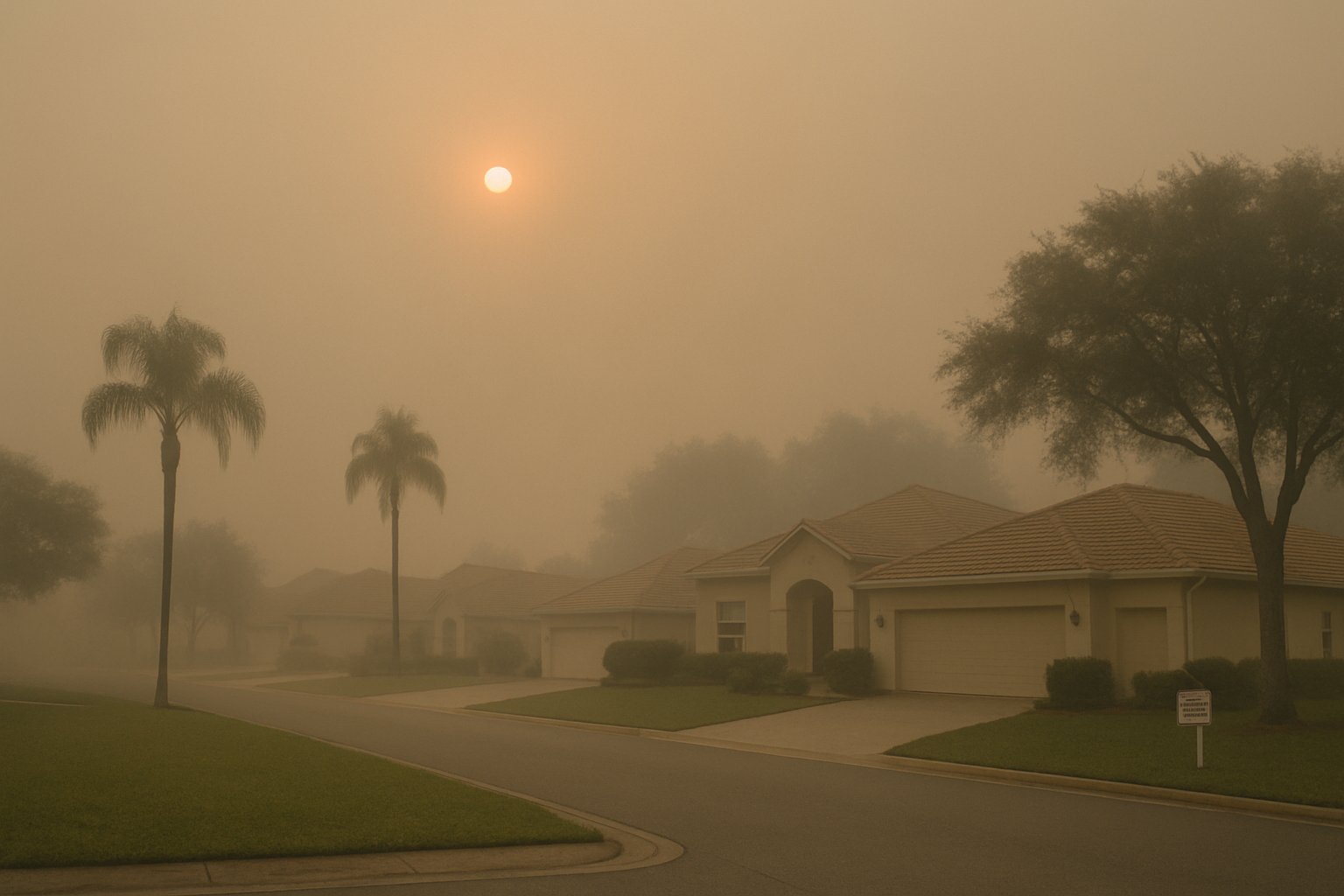
Wildfire smoke in Pasco County has disrupted daily life in recent weeks, forcing school closures and raising air quality concerns for homeowners and business owners across the region. Thick smoke from a contained wildfire in Starkey Wilderness Preserve led to the temporary closure of River Ridge Middle and High schools in New Port Richey, and active wildfires have been reported in every Bay Area county. With burn bans in effect and dry conditions persisting, residents are being urged to take steps to protect their indoor air quality.
What’s Driving the Smoke
Florida is experiencing months of unusually dry weather, compounded by a recent historic freeze that left vegetation highly flammable. According to officials, 678 fire alerts were reported across the state between January 31 and February 7, 2026. District Chief Dave Ingalls noted the current dry spell is unusual for this time of year, with burn bans typically appearing in late winter rather than as early as November. Small sparks from cigarettes, vehicles parked in tall grass, and catalytic converters have been enough to ignite fires in these conditions.
Local Impact
The smoke has affected air quality and road visibility throughout Hillsborough and Pasco counties, stretching fire rescue resources thin across the region. Recent incidents include a brush fire in Spring Hill that destroyed two cars and a shed, and separate blazes in Seffner and Lithia that threatened homes. North Port officials have responded to more than 30 illegal burns since their burn ban was enacted, and violating mandatory burn bans carries fines of $500 plus potential jail time and fire suppression costs.
How Your AC Filter Is Your First Line of Defense
When wildfire smoke settles over a neighborhood, outdoor air seeps into homes and businesses through doors, windows, and HVAC systems. Your air conditioning filter is one of the most important barriers between smoky outdoor air and the air your family or employees breathe indoors. Here are key steps homeowners and business owners can take:
- Check your AC filter immediately. Wildfire smoke carries fine particulate matter that clogs filters faster than normal. A dirty filter reduces airflow and allows contaminants to circulate indoors.
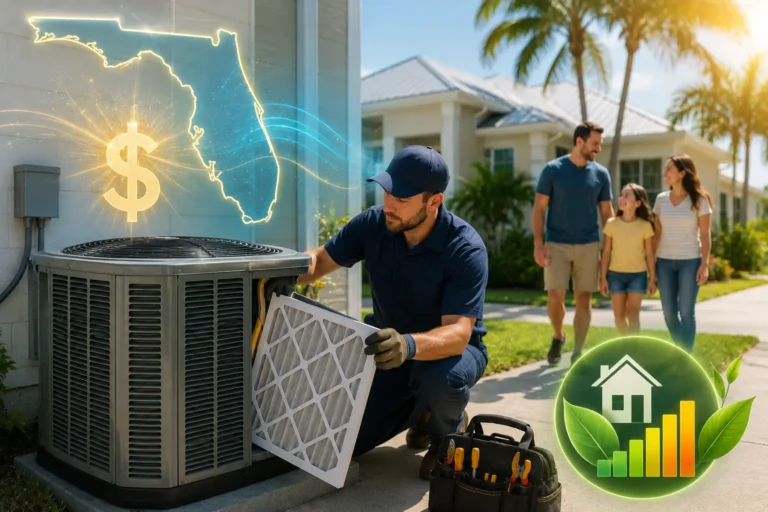
- Upgrade to a higher-rated filter. Filters rated MERV 13 or higher are more effective at capturing the fine particles found in wildfire smoke. Consult your HVAC technician to confirm your system can handle a higher-rated filter without restricting airflow.
- Replace filters more frequently during smoke events. During prolonged wildfire smoke exposure, filters may need to be changed every two to four weeks rather than the standard 30 to 90 days.
- Run your system on “fan only” or “circulate” mode. This keeps air moving through the filter even when cooling isn’t needed, providing continuous filtration.
- Keep doors and windows closed. Sealing your home or business and relying on your HVAC system for ventilation helps reduce the amount of smoke entering the building.
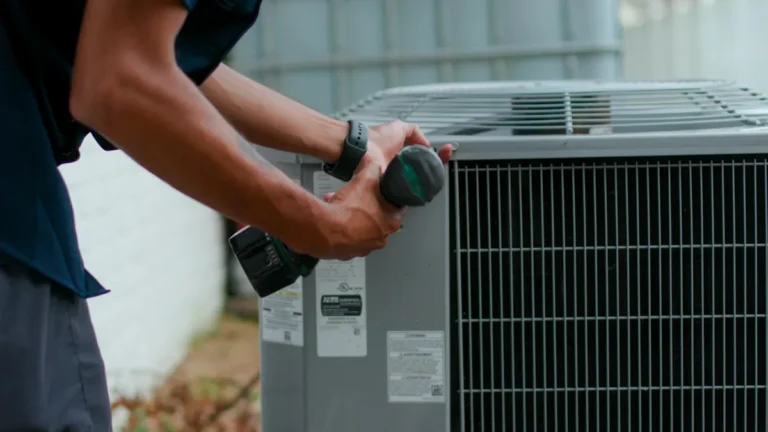
- Schedule a professional HVAC inspection. Smoke residue can accumulate in ductwork and on evaporator coils over time, reducing system efficiency and indoor air quality.
What Comes Next
Burn bans across the region will remain in effect until significant, sustained rainfall arrives, according to officials. Homeowners and business owners in Hillsborough and Pasco counties should continue monitoring local air quality advisories and take proactive steps to maintain their HVAC systems. For questions about filter upgrades, duct cleaning, or system inspections, residents are encouraged to Custom Air Conditioning & Air Quality for professional HVAC service.